3D Printed Concrete:
An Innovative, Efficient, and Resilient Solution to Canada’s Housing Needs
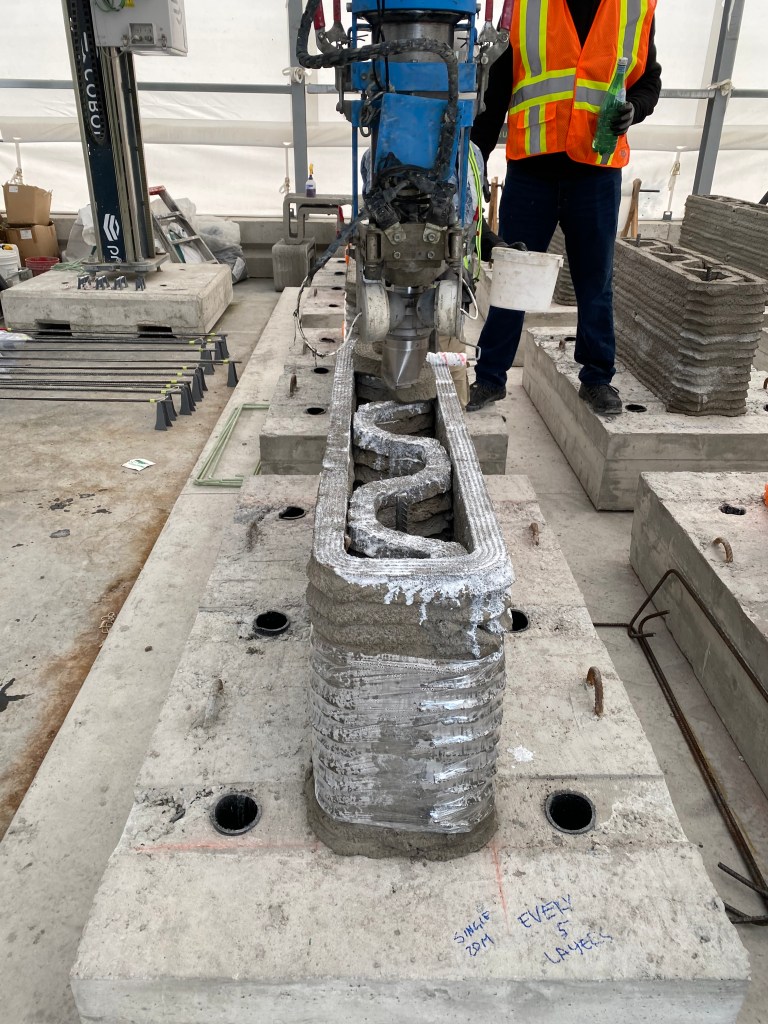
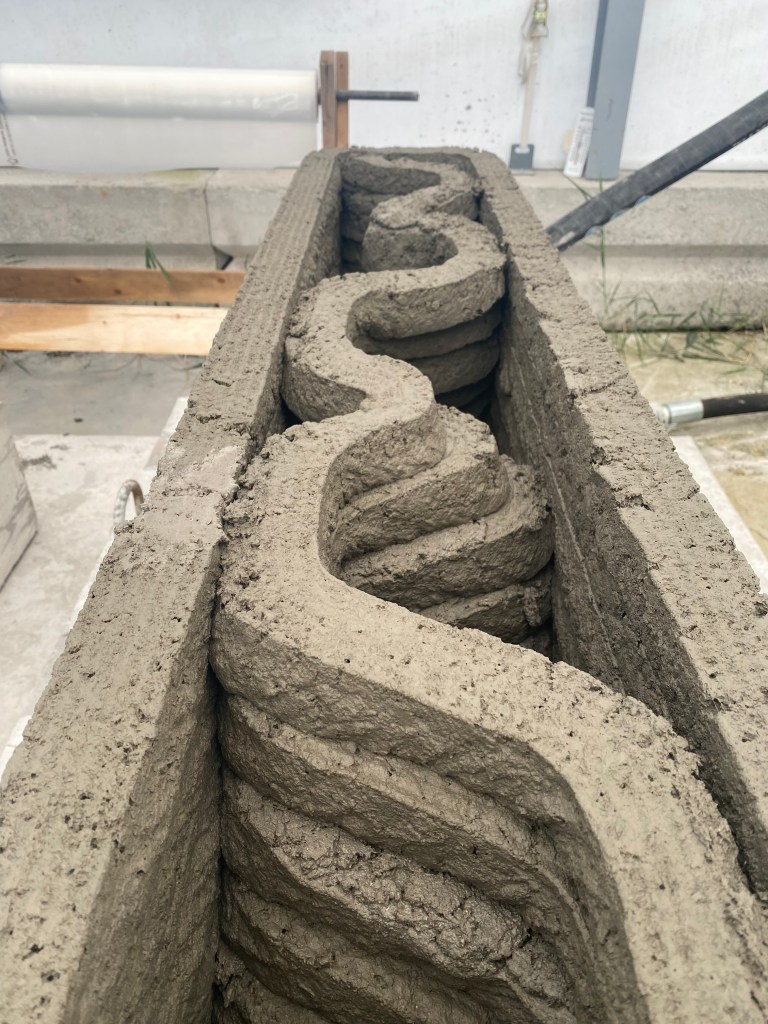
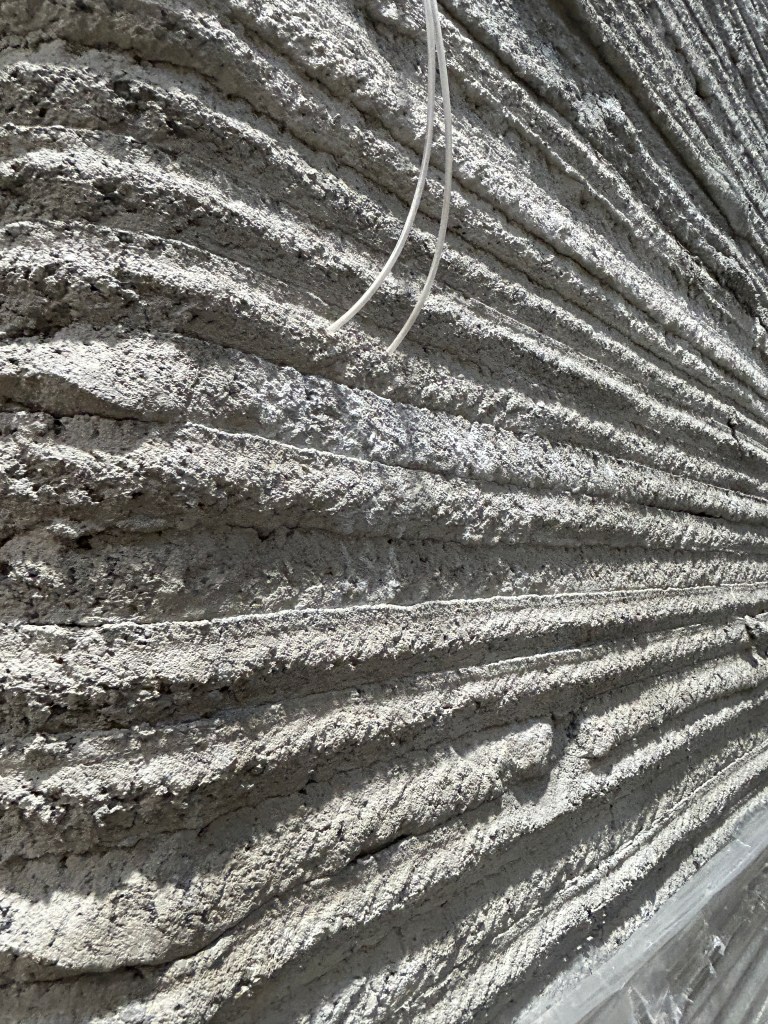
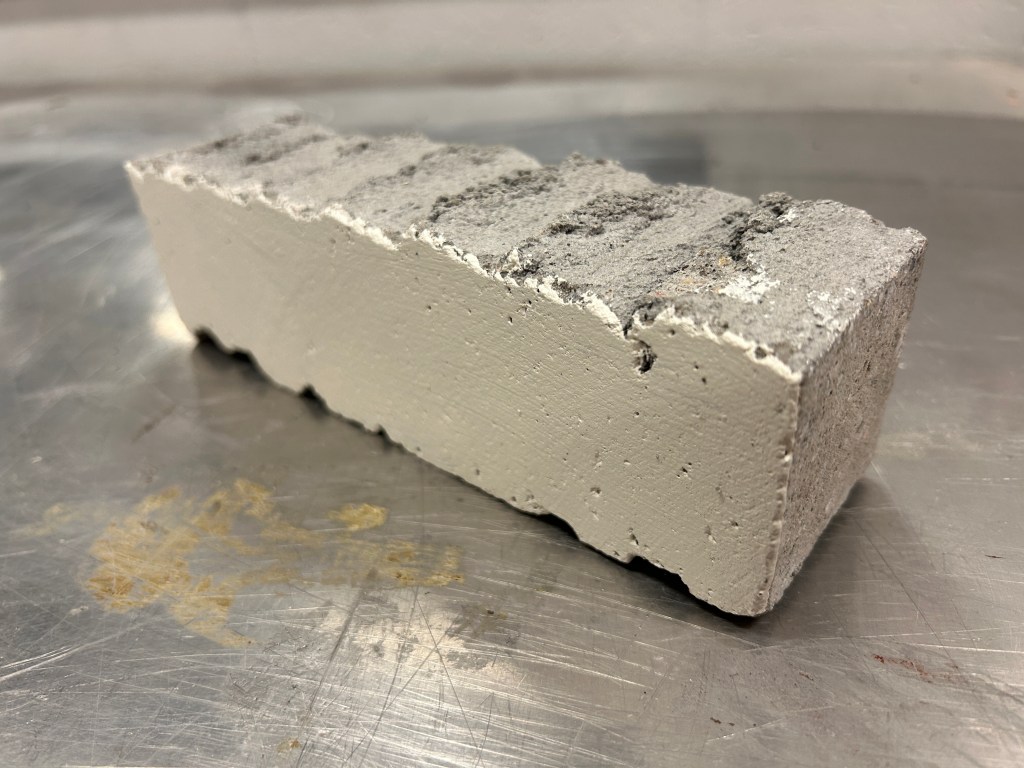
Project Summary (English): Additive manufacturing using 3D printed concrete (3DPC) is an innovative and efficient solution to address the need for livable and resilient housing in Canada. Using this novel technology, a single-storey home could be printed in one day, representing a significant improvement in efficiency when compared with traditional approaches while at the same time reducing material waste. However, more and better data on the structural performance of 3DPC is required to better understand its fundamental scientific behaviour, develop design tools for practitioners can use to design 3DPC infrastructure. Innovative solutions are also required to determine how to incorporate steel reinforcement, something that continues to be a barrier to constructing multi-storey buildings using 3DPC. Bringing together a diverse research team of experts in structural engineering, large-scale testing, and rapid construction, this project proposes to undertake a series of large-scale proof-of-concept tests on 3DPC structural walls to gather new and robust datasets on its performance and develop new solutions to several practical challenges that are preventing its widespread adoption. This includes studying the behaviour of 3DPC homes under a range of load types (e.g., earthquake) to ensure they are safe and resilient under day-to-day operation as well as extreme load events. Outcomes of the work will include tools and guides that will promote the use of this innovative solution in practice, which are being disseminated through both academic and industrial communities.
Project Summary (French): La fabrication additive utilisant le béton imprimé en 3D (3DPC) constitue une solution innovante et efficace pour répondre au besoin de logements habitables et résilients au Canada. Grâce à cette technologie novatrice, une maison de plain-pied pourrait être imprimée en une seule journée, représentant une amélioration significative de l’efficacité par rapport aux approches traditionnelles tout en réduisant le gaspillage de matériaux. Cependant, davantage de données de meilleure qualité sur la performance structurale du 3DPC sont nécessaires afin de mieux comprendre son comportement scientifique fondamental et de développer des outils de conception que les praticiens pourront utiliser pour concevoir des infrastructures en 3DPC. Des solutions innovantes sont également requises pour déterminer comment intégrer l’armature en acier, ce qui demeure un obstacle à la construction de bâtiments à plusieurs étages à l’aide du 3DPC. Réunissant une équipe de recherche diversifiée composée d’experts en génie des structures, en essais à grande échelle et en construction rapide, ce projet propose de réaliser une série d’essais de validation à grande échelle sur des murs structuraux en 3DPC afin de recueillir de nouveaux ensembles de données robustes sur leur performance et de développer de nouvelles solutions à plusieurs défis pratiques qui freinent leur adoption à grande échelle. Cela comprend l’étude du comportement des habitations en 3DPC sous différents types de charges (p. ex., séismes) afin de garantir leur sécurité et leur résilience dans les conditions d’exploitation quotidiennes ainsi que lors d’événements de charges extrêmes. Les retombées de ces travaux comprendront des outils et des guides visant à favoriser l’utilisation de cette solution innovante dans la pratique, lesquels seront diffusés auprès des communautés universitaires et industrielles.
Project Support: funding for this project was provided in part by the Federal Government of Canada. Technical and in-kind contributions from nidus3D and Aretek (formerly Printerra) are also gratefully acknowledged.



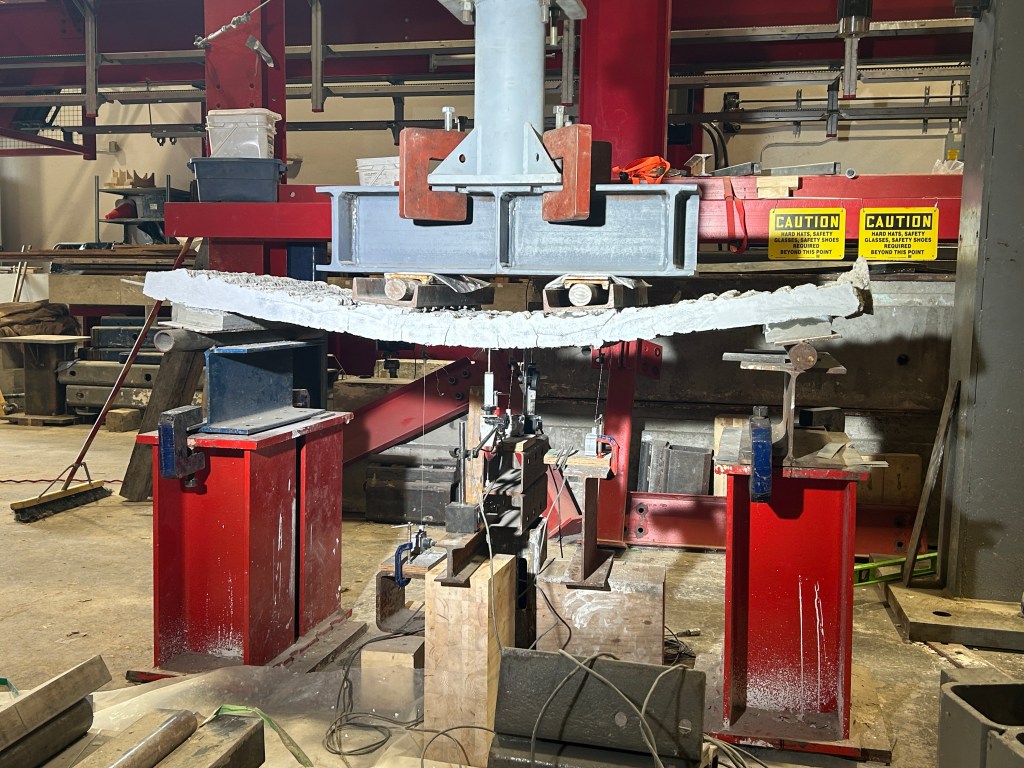
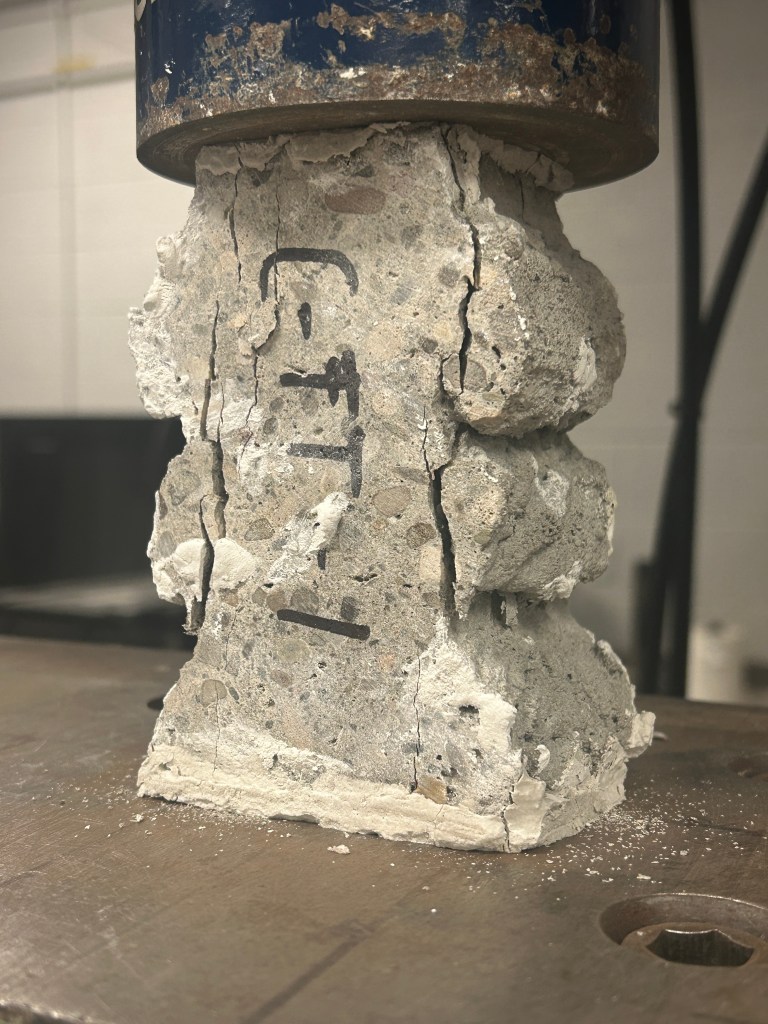
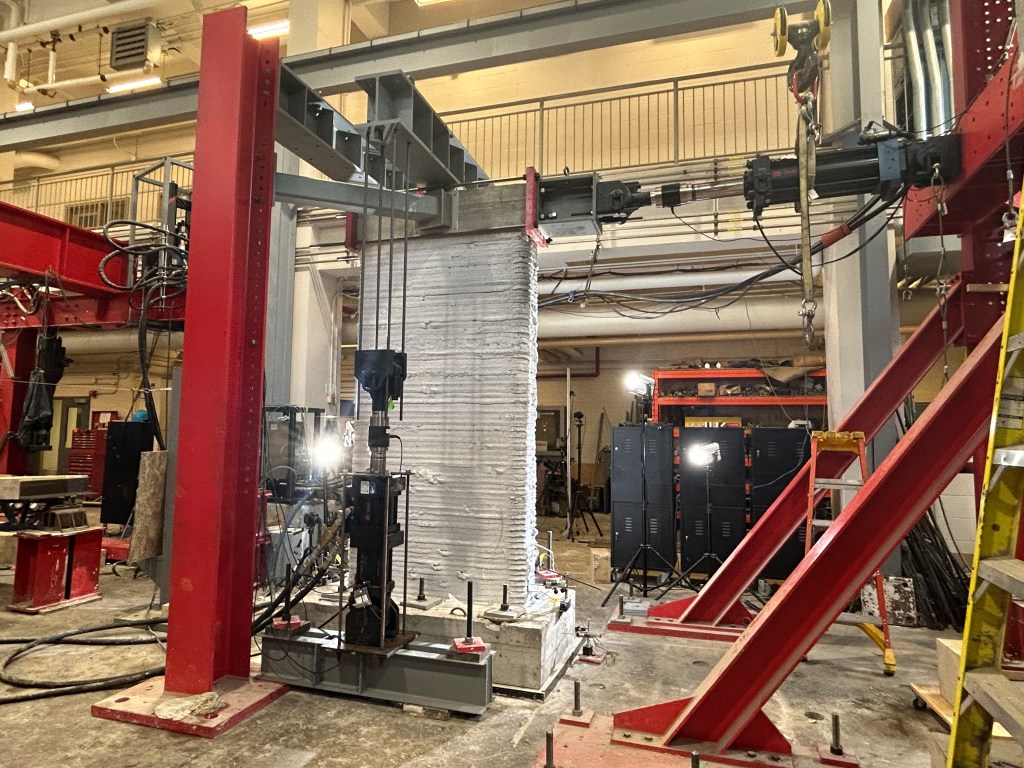
Seismic Testing of 3D-printed Concrete Shear Walls:
A novel aspect of this research was seismic testing of full-scale 3D-printed reinforced concrete shear walls. A significant challenge in expanding the use of 3DCP is the incorporation of longitudinal steel reinforcement and understanding their structural performance under earthquake loads. This study examines the performance of longitudinal steel reinforcement in the cavities of 3D printed concrete shear walls evaluates their structural behaviour under in-plane reversed cyclic loading. The work also investigates the influence of boundary element reinforcement detailing, shear wall aspect ratio (ratio of the wall height to its length), and the type of horizontal shear reinforcement (steel versus glass fiber-reinforced polymer (GFRP) bars), and axial load on wythe behaviour. Digital image correlation (DIC) is used to capture full-field displacement and strain distributions in the walls as well as crack widths. Results show that 3DPC shear walls exhibit cyclic behaviour that is different when compared to conventional reinforced concrete design. The response of the walls was found to be highly dependent on the strength of the base connection, and in cases when the base connection was under-designed, the wall behaved more like a precast or rocking wall system under in-plane loads. The use of horizontal shear reinforcement between layers of 3DPC was found to be effective at improving the diagonal tension capacity of the walls. See the publication below for more information!
Publications:
Hentschel, A., Fam, A.,Woods, J. (2026). Evalutating the In-Plane Behaviour of 3D Printed Concrete Shear Walls under Quasi-static Reversed Cyclic Loading. Engineering Structures. Submitted. (Link to Pre-Print).
Hentschel, A., Woods, J., Fam, A. (2026). Use of Near Surface Mounted Reinforcement in Single-wythe 3D Printed Concrete Wall Panels. In Proceedings of the Canadian Conference for Civil Engineering Annual Conference 2026. Quebec City, June 2-6. (Link to Paper).
Hentschel, A., Woods, J., Fam, A. (2026). Mechanical Performance of 3D Printed Concrete: Comparing Cast and Printed Concrete Materials. In Proceedings of the 17th International Conference on the Durability of Building Materials and Components. Montreal, July 20-24. (Link to Paper).
Hentschel, A., Woods, J., Fam, A. (2026). Out-of-plane Behaviour of Single-wythe 3D Printed Concrete Wall Panels with Near Surface Mounted Reinforcement. Construction and Building Materials. Submitted. (Link to Pre-Print).

